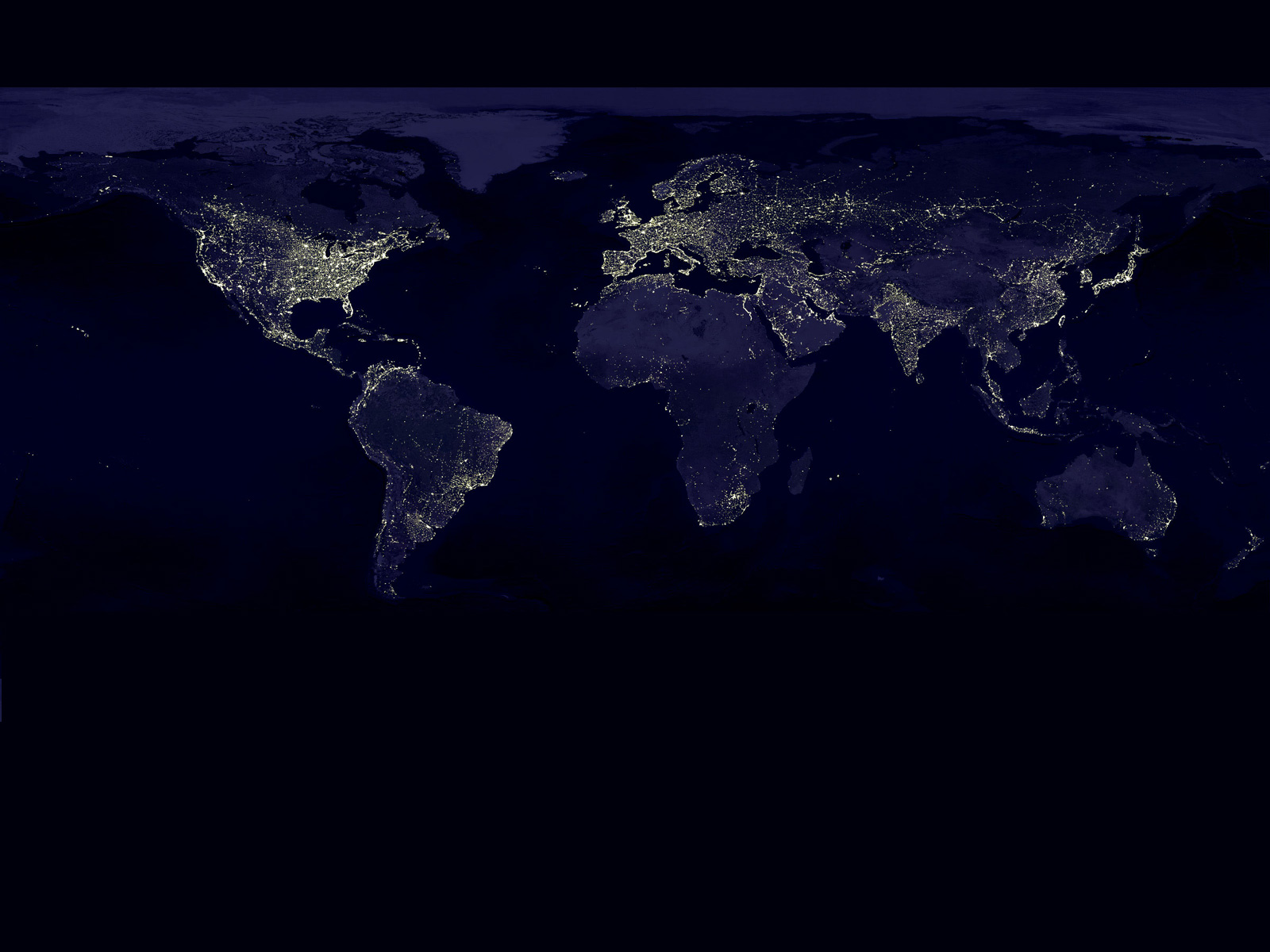
Earth at night
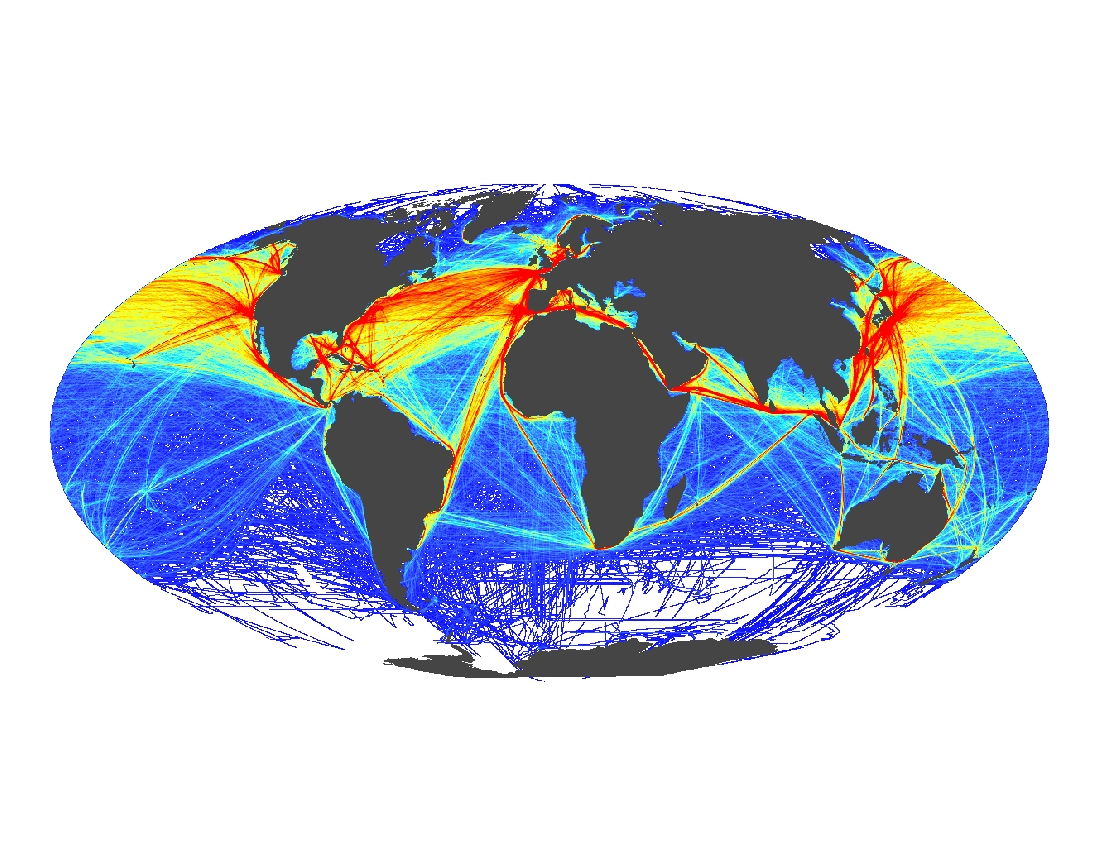 Global shipping
{Halpern et al. (2008), ‘A Global Map of Human Impact on Marine Ecosystems’, Science, 319, p. 948-952}
Earth at night
Global shipping
{Halpern et al. (2008), ‘A Global Map of Human Impact on Marine Ecosystems’, Science, 319, p. 948-952}
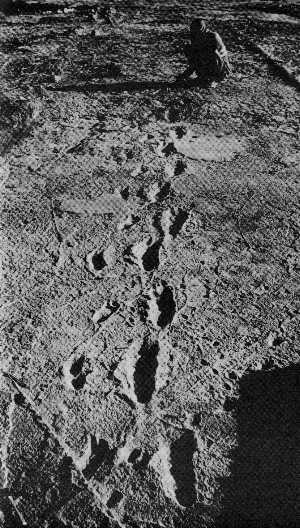
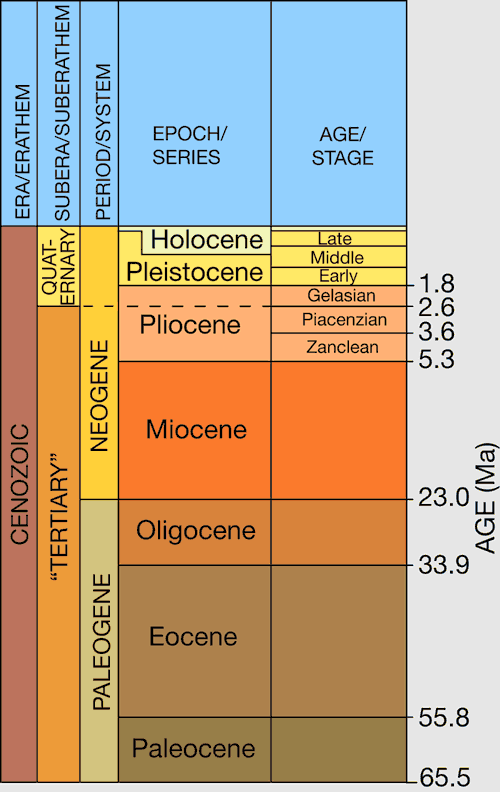
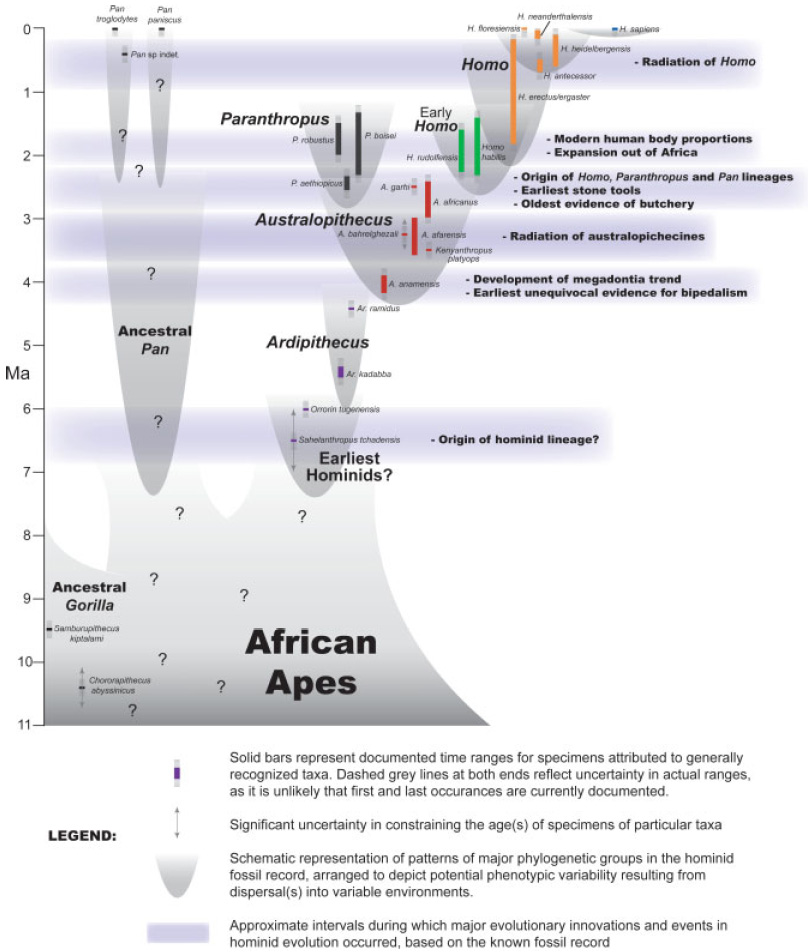
Kingston, J.D. (2007), ‘Shifting adaptive landscapes: Progress and challenges in reconstructing early hominid environments’, Yearbook of Physical Anthropology, 50, p. 20-28.
Entropy: Gk. 


 – evolution / transformation / turning
So, here’s an overview of current Schools of Thought tackling Human Behavioural Evolution:
| School | Neo-Darwinistic Sociobiology | Human Behavioural Ecology | Environmental Psychology | Dual-Inverse Theory | Memetics |
| Focus of selection | Gene / individual / group | Individual / behaviour | Individual / behaviour / psychological mechanism |
Individual / group / gene / culture variantPotential / predicted impact on genetic and cultural fitness | Meme / gene |
| Measure of natural selection | Reproductive success or proxy measure of fitness |
Reproductive success of proxy measure of fitness (enegetic balance) |
Potential / predicted impact on reproductive success / fitness |
Potential / predicted impact on genetic and cultural fitness |
Potential impact on genic and memic fitness |
| Methodology | Genic functionalism- construct genic level fitness enhancing / optimality models, test data against them |
Test data against optimality models, ecological expectations / prediction models from behavioral ecology |
Construct selection scenarios and describe predicted fitness increasing strategies, test with datasets |
Construct mathematical and conceptual models and simulations, sometimes test with datasets |
Construct selection scenarios, controlled thought experiments |
| Core causes of evolution of human behaviour | Genetic evolution produces both human general behavioural capacities and specific behavioural patterns / strategies |
Behaviour and behavioural strategies arise from adaptation to ecological and other selective pressures |
Psychological mechanisms (and thus behaviour) arose/arise through adaptation to pressures of the Environment or Evolutionary Adaptiveness (Pleistocene) and Adaptivity Relevant Environments |
Gene-culture coevolution results in patterns of complex, symbolic and linguistic human behaviour |
Selfish meme replication and meme-gene coevolution result in most human behaviour |
| Basic premise(s) | Humans are very complex and highly social animals whose behaviour is best analyzed via Neo-Darwinian approaches |
Humans, while highly adaptable, can be modeled using same premises as other animals, socioecological contexts drive most selection pressures |
Human universals and human behavioural strategies are reflections of adapted modules (psychological mechanisms) in the mind |
Humans are under genic and group selection for physical and cultural traits; culture and genetic co-evolve via natural selection |
Memes/memeplexes are primarily responsible for human behavioural variation and culture |
| Data | Ethnographic datasets, observations, comparisons with other animals especially primates, fossil record |
Behaviour observations, physiological and ecological measurements, ethnographic datasets |
Questionnaires, surveys, interviews, demographic and behavioural datasets, public records |
Ethnographic datasets, mathematical models | Popular ethnography, survey and interviews, general cultural information |
Adapted from Fuentes, A. (2009), Evolution of Human Behavior, Oxford University Press, Oxford/New York, p. 60-61.
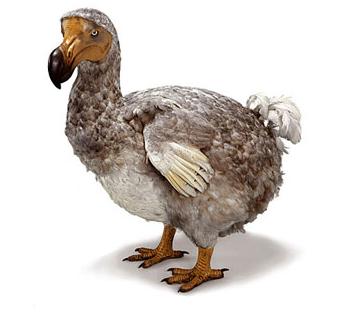
The Dodo: How did the Dutch do it?


Stramma et al. (2008), ‘Expanding Oxygen-Minimum Zones in the Tropical Oceans’, Science, 320, 655, p. 655-658. Something to worry about for a change.
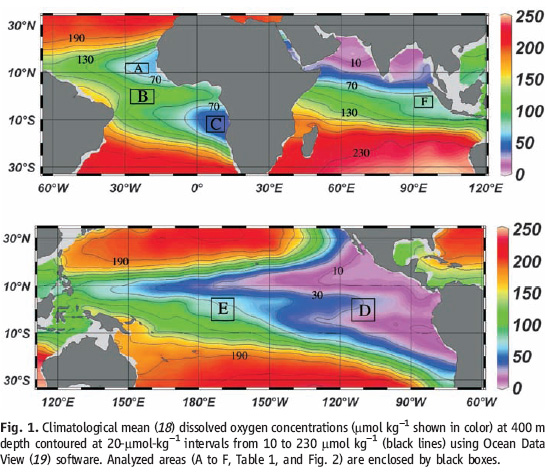
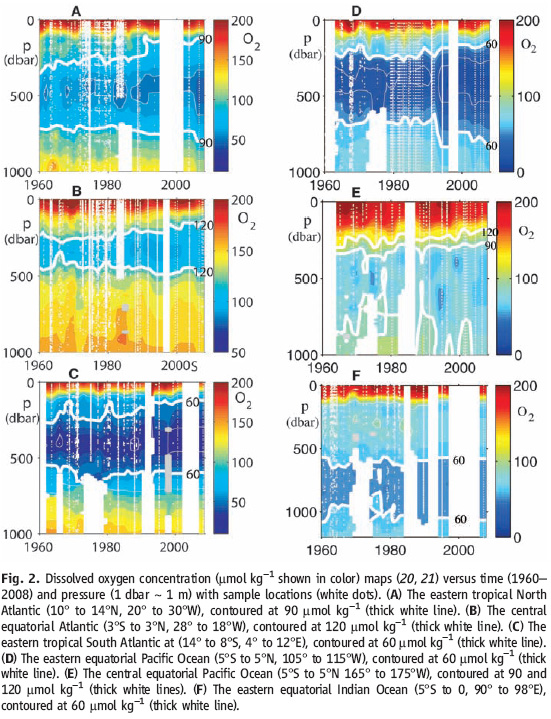
Take note: Ocean stratification may be a Bigger Deal than climate change.
Errr, I know you’re all really busy out there, but …