Category: Homo sapiens sapiens
3 different ways to identify an emotion
(1) The physiological brain state;
(2) The way an individual describes the feeling;
(3) The behaviour the feeling leads to.
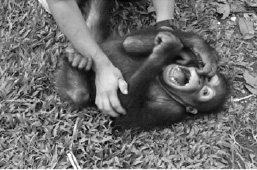
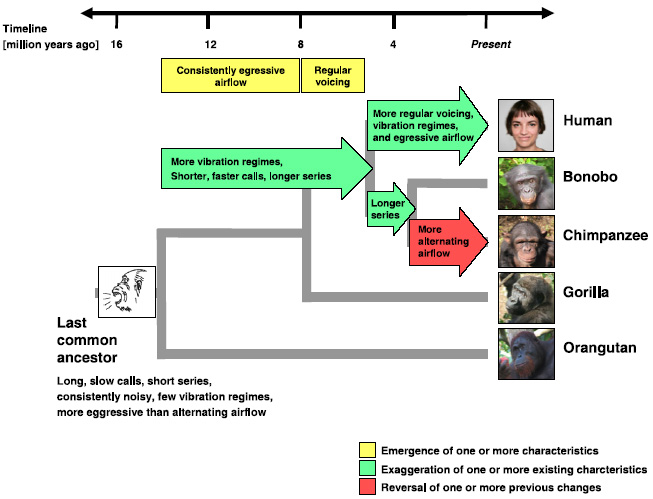
Regarding the Phylogeny of Tickle-Induced Laughter
Resource-Related Deceptive Alarm
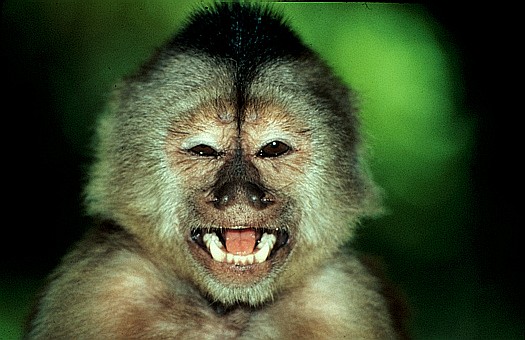
A new report by {Wheeler, B. (June 2009), Proceedings of the Royal Society B} exposes ‘R.R.D.A.’ amongst capuchin monkeys in Iguazá National Park, Argentina. The deceitful lil’ buggers proffer two-syllable cooing sounds, normally uttered in response to danger, for “no apparent reason […] other than to chase the other individuals off the food platform”.
Altruism, Inter-group conflict, Demography
Well, humans, hasn’t it been an interesting week in the modelling of your behaviour?
(1) To start off, {Powell et al. (2009), Science, 324, p. 1298-1301} convincingly argue that it was population density, not genetic change, that got the ball rolling on your symbolic and technological complexity in the Late Pleistocene: (z measures “level of ability at some cultural skill or in some cultural domain”.)
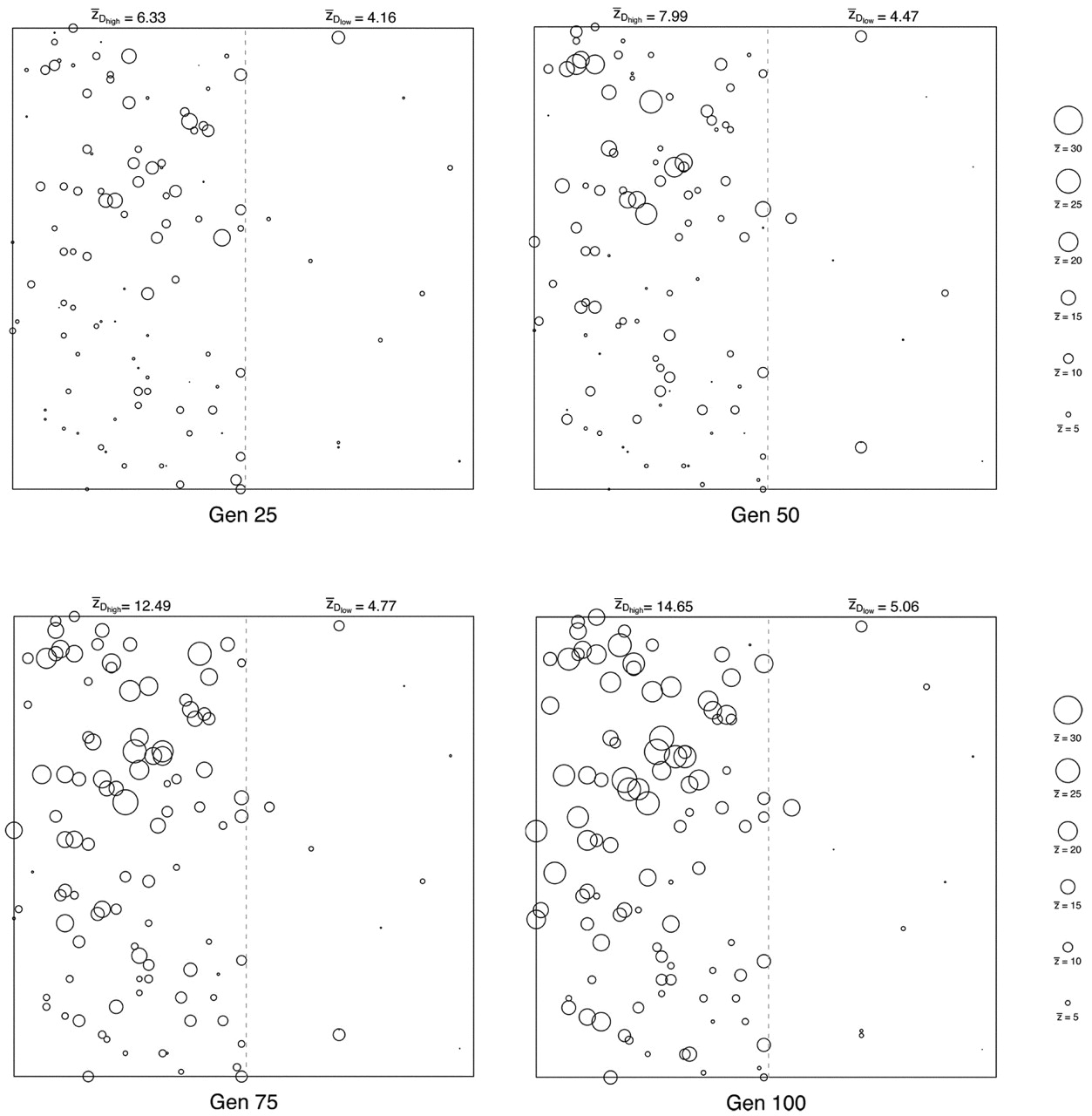 An illustration, from a single iteration and shown at 25-generation intervals, of the spatial structuring of skill accumulation in a heterogeneous subpopulation density world. The left side of each subplot is populated at density Dhigh (0.02) and the right side at density Dlow (0.002). Each subpopulation is marked by a circle, centered on the spatial location of the group and with diameter proportional to its mean z value. Regional mean z values are also given at the top of each subplot.
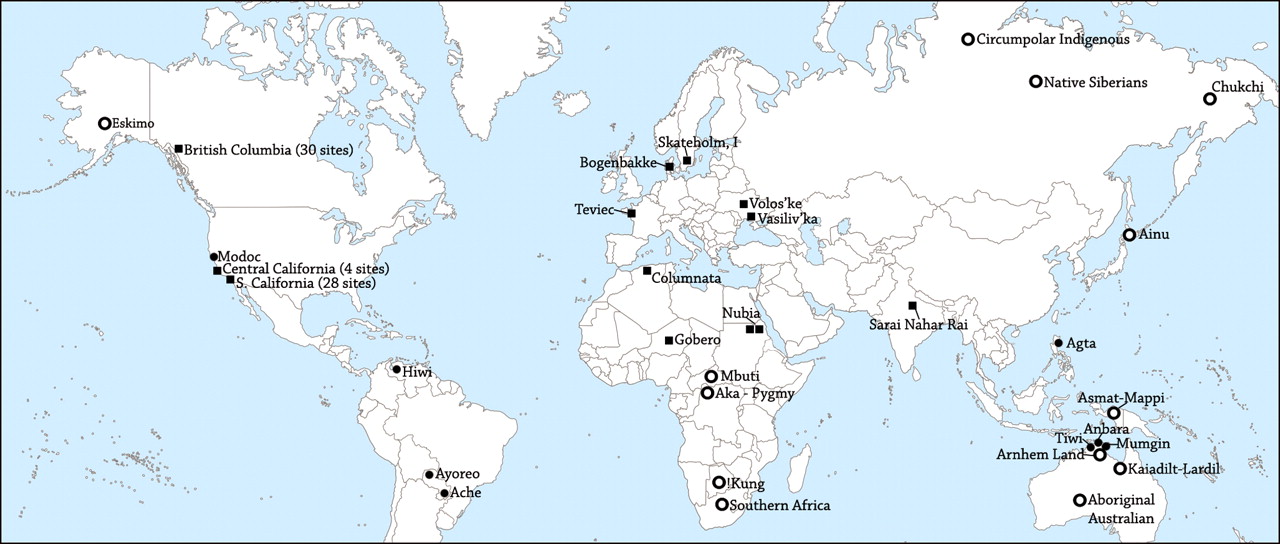
(2) And {Bowles, S. (2009), Science, 324, p. 1293-1298} argues that it was mortality due to inter-group rivalry that gave rise to your much-touted costly individual altruism. Particularly interesting is his analysis of Pleistocene mortality rates resulting from inter-group conflict:
 Sources of archaeological (filled squares) and ethnographic (filled dots) evidence on warfare and genetic (open dots) data on between-group differences.
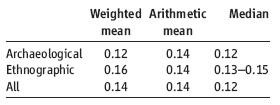 Summary statistics: Fraction of total mortality due to warfare.
Laetoli footprints, 3.6 Ma
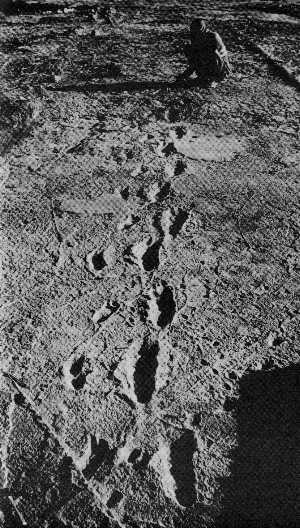
Human Evolution
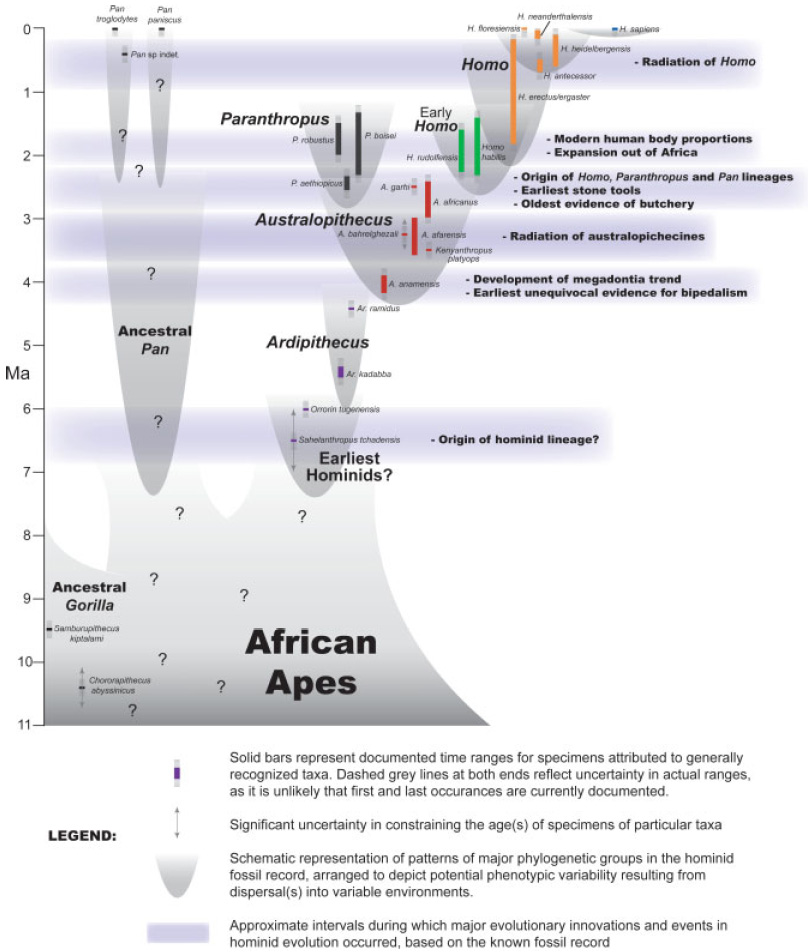
Kingston, J.D. (2007), ‘Shifting adaptive landscapes: Progress and challenges in reconstructing early hominid environments’, Yearbook of Physical Anthropology, 50, p. 20-28.
Overview of Dominant Approaches to Human Behavioural Evolution
So, here’s an overview of current Schools of Thought tackling Human Behavioural Evolution:
| School | Neo-Darwinistic Sociobiology | Human Behavioural Ecology | Environmental Psychology | Dual-Inverse Theory | Memetics |
| Focus of selection | Gene / individual / group | Individual / behaviour | Individual / behaviour / psychological mechanism |
Individual / group / gene / culture variantPotential / predicted impact on genetic and cultural fitness | Meme / gene |
| Measure of natural selection | Reproductive success or proxy measure of fitness |
Reproductive success of proxy measure of fitness (enegetic balance) |
Potential / predicted impact on reproductive success / fitness |
Potential / predicted impact on genetic and cultural fitness |
Potential impact on genic and memic fitness |
| Methodology | Genic functionalism- construct genic level fitness enhancing / optimality models, test data against them |
Test data against optimality models, ecological expectations / prediction models from behavioral ecology |
Construct selection scenarios and describe predicted fitness increasing strategies, test with datasets |
Construct mathematical and conceptual models and simulations, sometimes test with datasets |
Construct selection scenarios, controlled thought experiments |
| Core causes of evolution of human behaviour | Genetic evolution produces both human general behavioural capacities and specific behavioural patterns / strategies |
Behaviour and behavioural strategies arise from adaptation to ecological and other selective pressures |
Psychological mechanisms (and thus behaviour) arose/arise through adaptation to pressures of the Environment or Evolutionary Adaptiveness (Pleistocene) and Adaptivity Relevant Environments |
Gene-culture coevolution results in patterns of complex, symbolic and linguistic human behaviour |
Selfish meme replication and meme-gene coevolution result in most human behaviour |
| Basic premise(s) | Humans are very complex and highly social animals whose behaviour is best analyzed via Neo-Darwinian approaches |
Humans, while highly adaptable, can be modeled using same premises as other animals, socioecological contexts drive most selection pressures |
Human universals and human behavioural strategies are reflections of adapted modules (psychological mechanisms) in the mind |
Humans are under genic and group selection for physical and cultural traits; culture and genetic co-evolve via natural selection |
Memes/memeplexes are primarily responsible for human behavioural variation and culture |
| Data | Ethnographic datasets, observations, comparisons with other animals especially primates, fossil record |
Behaviour observations, physiological and ecological measurements, ethnographic datasets |
Questionnaires, surveys, interviews, demographic and behavioural datasets, public records |
Ethnographic datasets, mathematical models | Popular ethnography, survey and interviews, general cultural information |
Adapted from Fuentes, A. (2009), Evolution of Human Behavior, Oxford University Press, Oxford/New York, p. 60-61.
Mating behaviour
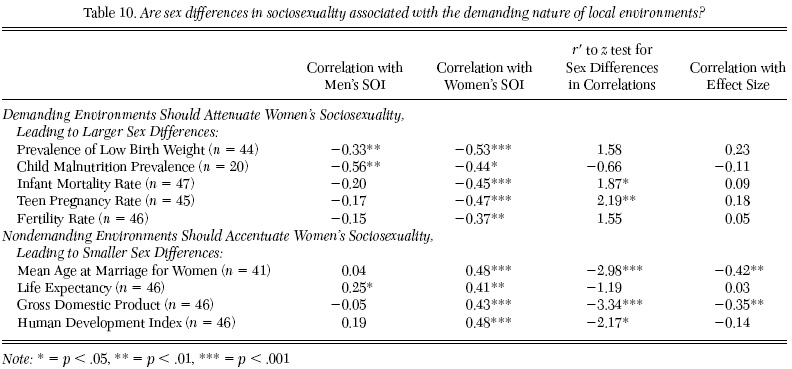
‘Sociosexuality’ measures mating style preference, expressed on a continuum from extreme monogamy (low index) to extreme polygamy (high index). A 25-language 48-nation >14.000-participant study (Schmitt, David (2005), ‘Sociosexuality from Argentina to Zimbabwe: A 48-nation study of sex, culture, and strategies of human mating’, Behavioral and Brain Sciences, 28, p. 247-311) found that men are consistently more enthusiastic about polygamy than women:
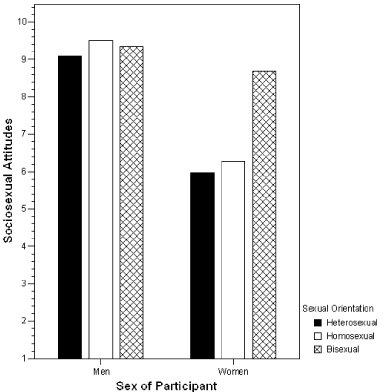
That much is expected. In addition, the study found that elevated male/female ratios and environmental stressors correlate with lower sociosexuality: