CO2 buffering capacity of our oceans

The equivalent of ~25% of current anthropegenic CO2 additions to the atmospheric reservoir is buffered by the oceans:
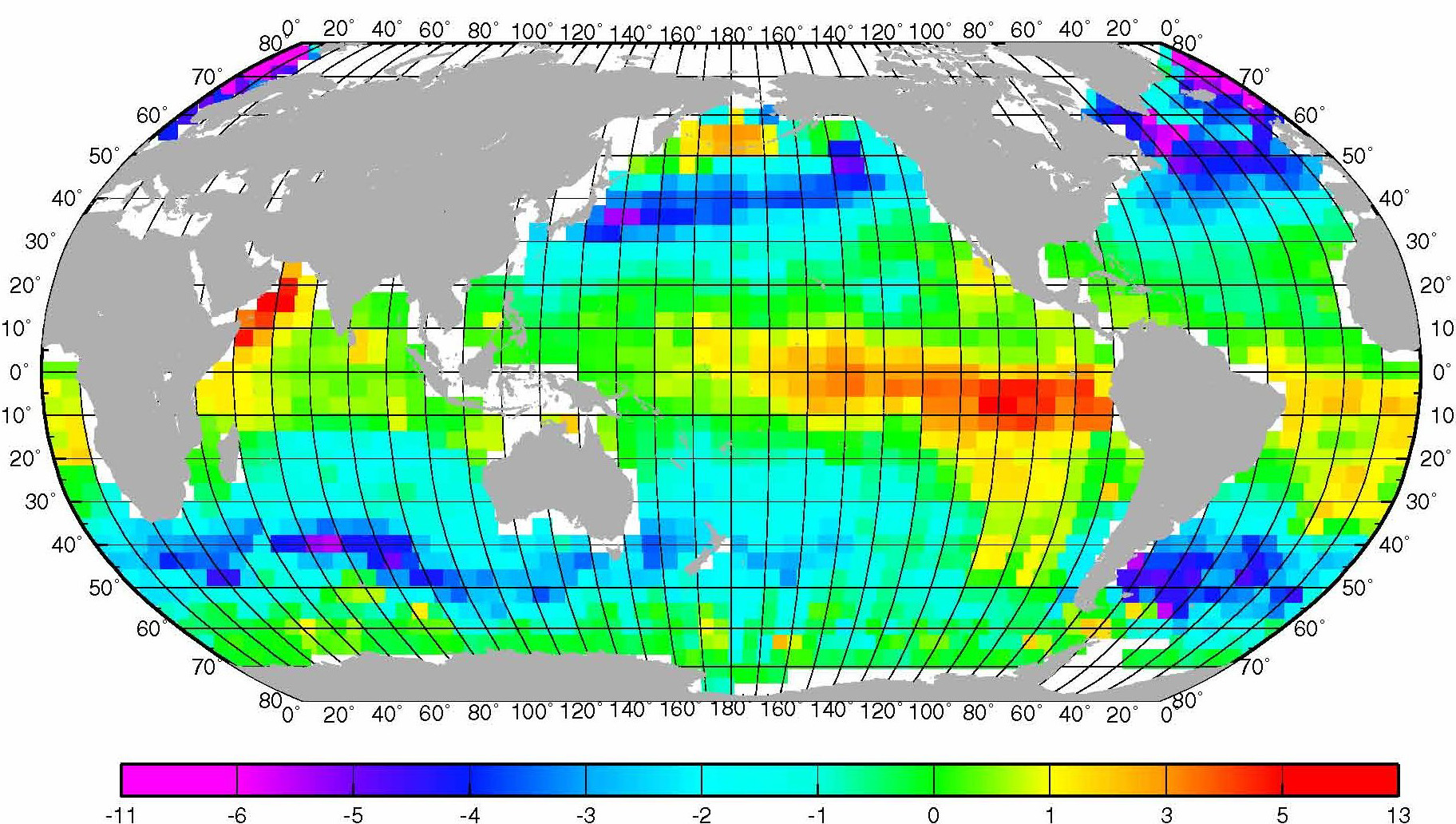
ocean_co2_flux
Net moles CO2 m-2 yr-1

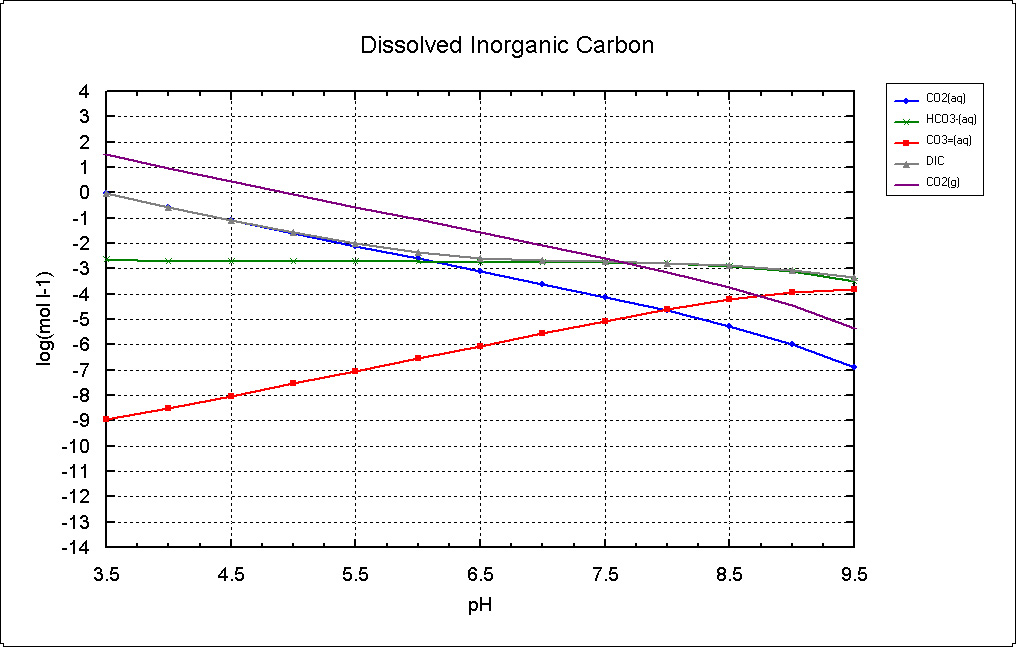
Dissolved CO2 exists as different species: CO2(aq), HCO3-(aq) and CO3=(aq). Ocean pH is the dominant control on this speciation, itself a function of pCO2:

dic2
Dissolved Inorganic Carbon ('DIC') speciation (in log(mol per litre) units) as a function of ocean pH. Partial pressure of CO2 (in log(pCO2, atm) units) also shown. {www.realfuture.org}

CO2 speciation greatly affects CO2 fluxing across the ocean-atmosphere boundary, as only non-ionized species (that is, CO2(aq)) are free to exchange with the atmosphere. Anthropogenic increases in ocean acidity can be expected to greatly lower the CO2 buffering capacity of our oceans.
Paleocene/Eocene Thermal Maximum

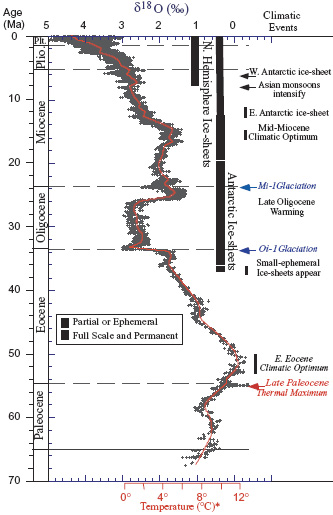
~55 million years ago, the Paleocene/Eocene Thermal Maximum saw global temperature increase by ~5°C in ~15000 years:

zachos_2001
Zachos (2001), 'Trends, Rhythms, and Aberrations in Global Climate', Science 292, p. 686.

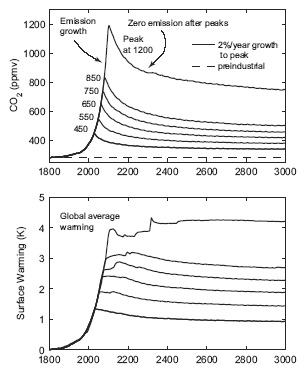
Today, we face a similar ~5°C temperature increase, but wrought within ~one tenth the amount of time:

solomon_2009
Solomon et al. (2009), 'Irreversible climate change due to carbon dioxide emissions', PNAS 106, p. 1704-1709.

How will the {Earth System}’s negative feedback cycles respond in the face of this unprecedented rate of change?