David Porter (2014)
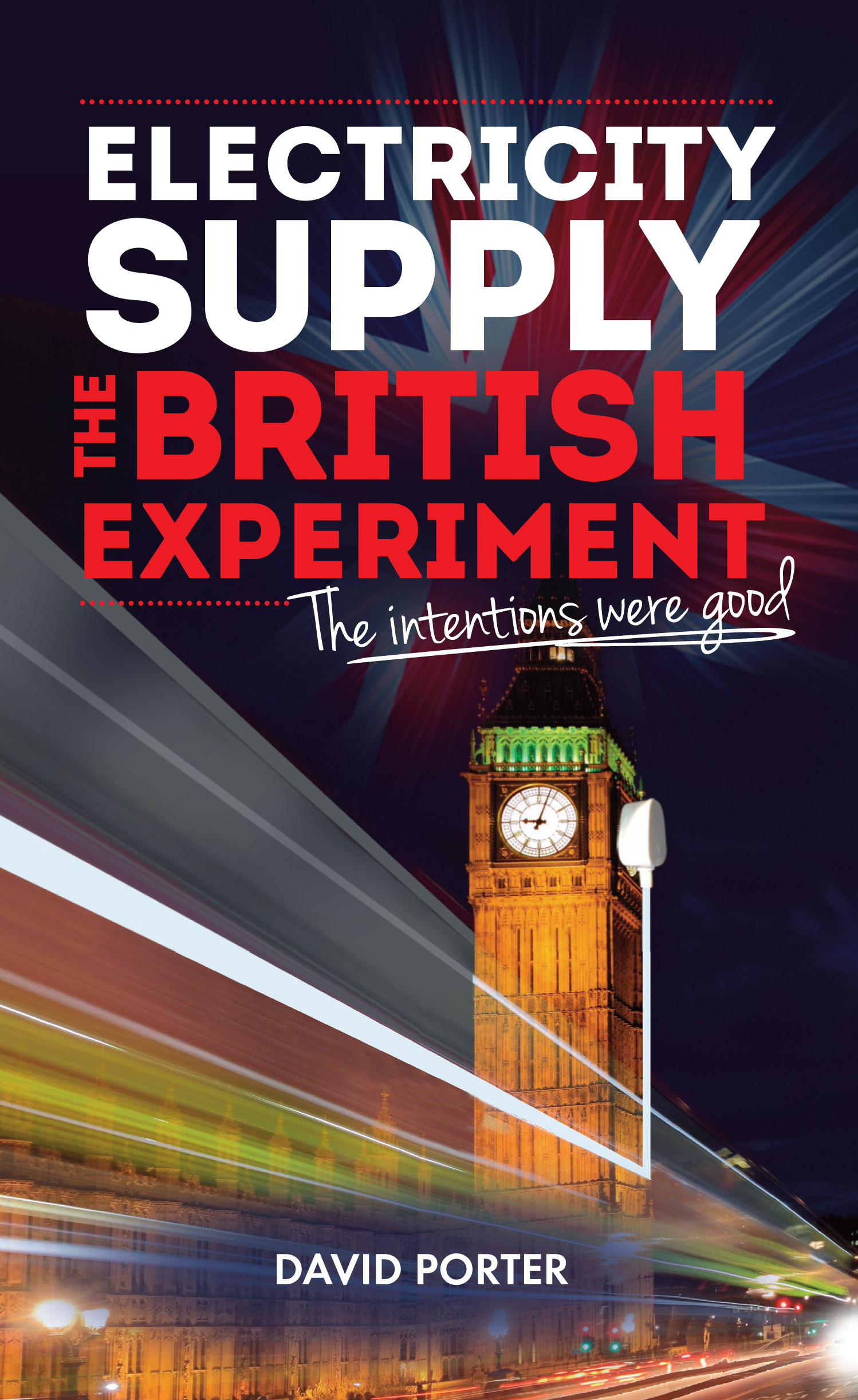 An unashamedly opinionated account of the privatization of the UK energy industry, told from the inside. Highly recommended for market fundamentalists and opponents alike.
Influential reading
David Porter (2014)
An unashamedly opinionated account of the privatization of the UK energy industry, told from the inside. Highly recommended for market fundamentalists and opponents alike.
John Kenneth Galbraith (1967)
 .
.
Dieter Helm (2012)
 A case for gas as a bridging fuel to a renewable future.
Dieter Helm (2015)
 Thin. Very thin.
Timothy Morton (2013)
Paul Ormerod (1994)
 A dynamical systems approach to select questions in economics and sociology.
Timothy Mitchell (2011)
 Buried amongst sometimes somewhat haughty paragraphs of Mitchell’s book are two fairly radical propositions. The first is that ‘[d]emocratisation has generally depended on engineering […] forms of vulnerability’, and this vulnerability arises because particular manufacturing processes ‘can render the technical processes of producing concentrations of wealth dependent on the well-being of large numbers of people’. What Mitchell means to say is that certain vital processes – to do with energy, as it happens – become vulnerable due to structural bottlenecks, and that leveraging these vulnerabilities has enabled the process of ‘democratisation’. The two examples he covers are those of coal and oil. Coal mines tended to be distal from urban centres and susceptible to strikes by coal miners, which would spread downstream along the supply chain to railways, etc. This allowed coal workers to press for democratic concessions.
The story to do with the structural vulnerabilities around oil is more complicated, and I am not convinced Mitchell’s story is entirely self-consistent. Here we find the – to me – second radical proposition: that oil companies throughout history have been far more concerned with constricting the supply of oil, rather than expanding it.
The net result is that most of Mitchell’s book reads like a whirlwind tour of the 20th Century oil-bearing regions, with Western oil companies and their government cronies in a constant tussle with governments desperately looking for ways to get their national fossil fuel endowment to market.
Richard Tol (2014)
 One of the first attempts at a textbook on Climate Economics. Probably the best overview of neoclassical climate economics in a single volume. For a critical non-neoclassical review, read Chalmers & Shackley’s (2014) review of the book.
One point: as a neo-classicist, Tol has a deeply instilled ‘equilbrium view’ and brings this epistemic perspective to his view of how the ‘natural world’ works. His is a view of climate change as a continuous secular process that amounts (‘merely’) to a x-degreeC-per-year change in temperature. What ‘equilibrium thinkers’ need to understand is that the Earth system is currently not in equilibrium; most of the mounting costs aren’t to do with the (more predictable) secular changes in average temperatures and precipitation: they are to do, rather, with the increased variability and (associated) decreased predictability of ‘weather’. Note that I am not speaking here about the uncertainty to do with future (average) temperature trends.
I think this is important, because people trained in economics (and more especially finance) should at least have an strong intuition for the costs (‘premium’) associated with decreased predictability / increased variability – although to date little work has been done in tying this into climate change economics.
Karl Marx (1867)
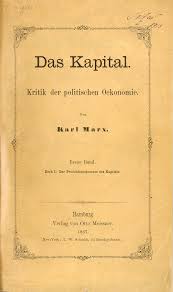 Oh, yeah! Let neither friend nor foe quip, ‘but thou hasnae even read …’.
Leaves surprisingly much unanswered. That is, I was expecting a more complete system. So value is determined through socially necessary labour time, through a straightforward quantitative relation. Fine. But what’s so special about labour that makes it the locus of surplus value creation? Formally, what’s to stop individual units of labour being treated as entrepreneurs, and generating their own ‘internal’ surplus value within the production process? Well, maybe answers are to be found in Vols. 2 & 3 …
Stephen Gardiner (2011)
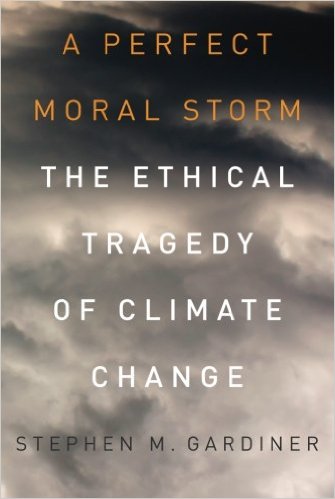 An opening salvo towards an ‘Ethics of Climate Change’.