(2005) Gary Gutting
 Super short introduction the quality of whose reflection on Foucault’s thought I’m as yet in no position to judge.
Influential reading
Super short introduction the quality of whose reflection on Foucault’s thought I’m as yet in no position to judge.
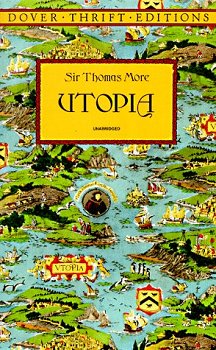 “And I’ve no doubt that either self-interest, or the authority of our Saviour Christ – Who was far too kind to recommend anything else – would have led the whole world to adopt the Utopian system long ago, if it weren’t for that beastly root of all evils, pride. For pride’s criterion of prosperity is not what you’ve got yourself, but what other people haven’t got. Pride would refuse to set foot in paradise, if she thought there’d be no under-privileged classes there to gloat over and order about – nobody whose misery could serve as a foil to her own happiness, or whose poverty she could make harder to bear, by flaunting her own riches. Pride, like a hellish serpent gliding through human hearts – or shall we say, like a sucking-fish that clings to the ship of state? – is always dragging us back, and obstructing our progress towards a better way of life.”
More’s the man.
Manifesto of the Communist Party (1848), Karl Marx & Friedrich Engels
Value, Price and Profit (1865), Karl Marx
Wage-labour and Capital (1847-1849), Karl Marx
When told what has been occupying me for several hours today, several people reacted with surprise: “You mean you haven’t read that before!?” (Parenthetically, it turned out on each of these occasions that the disappointees had themselves, in point of fact, never read the Manifesto or the other works either.) So now I have. The comments below are highly simplistic, and I am almost embarrassed to reveal them here. Continue reading A Triad of Marxist Classics
 To those familiar with Russell’s thinking, this will be a rather predictable and bland account. Disappointingly little discussion of why and how science is epistemically special.
 An excellent account of the unusual history of the Hupa people of northern California.
 A soul-crushingly cute yet ruthless account of a 1930s Cherokee childhood.
 So.
So.
So this is a rather ballsy work. In varying depth, Ryan & Jethá aggressively attack several scientific consensuses, all orbiting within the broad ambit of human sexuality. A light-hearted writing style makes this a highly accessible work. Below, I focus on some of the key assertions and arguments of interest.
Primary amongst the traditional views attacked, and the books main target, is the idea that humans evolved from a monogamist prehistory – a period the authors peg as the 200,000 years immediately prior to agriculture and writing. (It is interesting to note how this disparate pair of technologies is often conjoined by use of this sense of the term). In strong contrast to todays western nuclear family, the authors posit that “the ‘natural’ family structure of our species” is one that enjoys “easy acceptance between adults and unrelated children, the diffuse nurturing found […] where children refer to all men as father and all women as mother, […] small and isolated enough to safely assume the kindness of strangers, where overlapping sexual relationships leave genetic paternity unknowable and of little consequence …”. The modern pair-bond is painted as a distortion brought about by recent transition to sedentary agriculture. Continue reading Sex at Dawn
 Finally.