Ha-Joon Chang (2014)
  Great introduction to Economics, make all your students read it!
Ha-Joon Chang (2014)
 Great introduction to Economics, make all your students read it!
Steve Keen (2011)
 Thought-provoking but at times ranting review of arguments – many of them original – against the theoretical edifice of neo-classical economics.
Thomas Piketty (2014)
 Capital in the Twenty-First Century has rapidly become famous, not least through sparking controversial responses from the likes of The Financial Times and The Economist (the latter, believe it or not, actually in response to the FT’s attack on Piketty’s book). Continue reading Capital in the Twenty-First Century
Kjell Aleklett (2012)
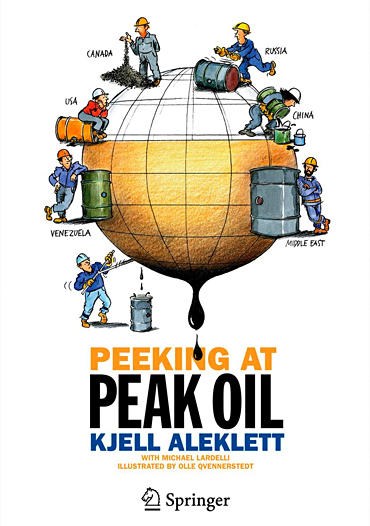 Despite trying hard not to, I really really like this book. Wonderfully illustrated, and written in a clear and unpretentious style, I have no choice but to go on record saying: great book, Kjell. If you read only one book on Peak Oil, this is the one. Read about some of Kjell’s forecasts here.
Morgan Downey (2009)
 A broad overview of … well, oil. Oil trader Downey’s refreshingly unacademic style provides a refreshing break from haughty academic tracts. There are minor technical inaccuracies in the non-finance-related chapters.
Niall Ferguson (2008)
 An account of the rise and evolution of modern finance.
Proviso: I’ve been warned about Ferguson: “a lot of people have a lot of bad things to say about Ferguson and his hard money and American Empire (as a continuation of the British Empire) loving views. See http://www.theatlantic.com/
Dambisa Moyo (2009)
 A sustained attack on Western aid to Africa. Not only has aid been largely impotent, asserts Moyo, it has done actual harm.
Many will disagree, but I happen to feel that it being written by a Zambian counts for something. The experience of truly having lived in the ‘developing world’ is one that too few influential development economists share. It’s one reason (there are many others) why, when then likes of Ha-Joon Chang and Dambisa Moyo talk development economics, attention is warranted.
Moyo prescribes a whole-hearted embrace of private-sector finance, and is enthusiastic about China’s business-oriented approach to Africa.
Frederick Soddy (1926)
 “Money is now a form of national debt, owned by the individual and owed by the community, exchangeable on demand for wealth by transference to another individual. Its value or purchasing power is not directly determined by any positive or existing quantity of wealth, but by the negative quantity, or deficit of wealth, the ownership and enjoyment of which is voluntarily abstained from without the payment of interest, by the owners of the money, to suit their individual business and domestic affairs and convenience.”
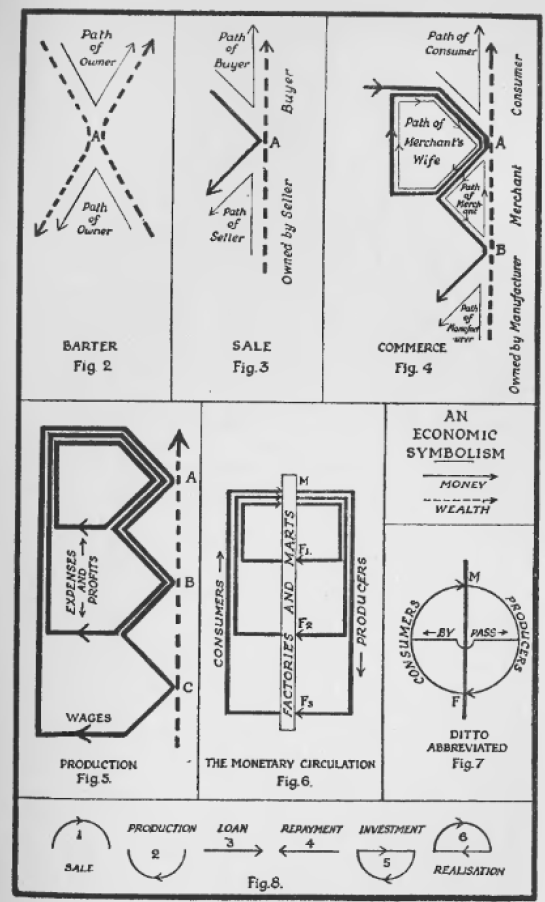
Soddy’s first nine conclusions worth quoting at length, I reckon: Continue reading Wealth, Virtual Wealth and Debt
(2010) Christian Anton Smedshaug
 A work that is timely and rich in content. On the down side, too little of its data is appropriately referenced, and it is shakily translated, becoming almost unreadable in the last few chapters. Its impressive arsenal of graphs is let down by sloppy captions and legends.
(2007) Howard Odum
 The ultimate systems-thinker’s guide to energy and society. Perhaps too qualitative for some.