Lula da Silva and Hu Jintao are considering scrapping the US$ in favour of reals and renminbis in their trade transactions.
Lula da Silva and Hu Jintao are considering scrapping the US$ in favour of reals and renminbis in their trade transactions.
“[…] the thinkers and workers in science; they have rarely aimed at producing effects but have dug away quietly under their mole-hills. They have thus caused little annoyance or discomfort, and often, as objects of mockery and laughter, have without desiring it even alleviated the life of men of the vita activa.” – Nietzsche, Morgenröte
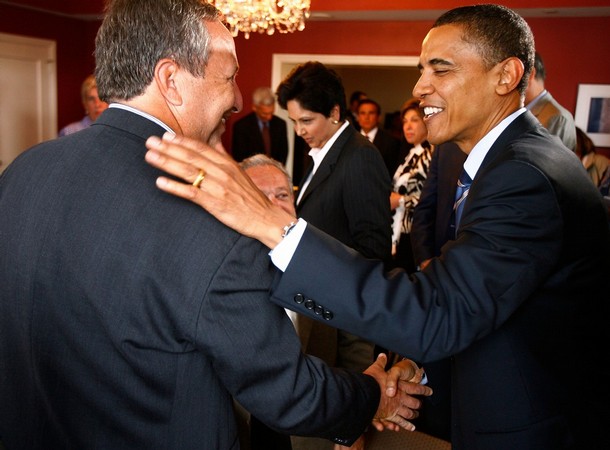
“I think the economic logic behind dumping a load of toxic waste in the lowest wage country is impeccable and we should face up to that. […] I’ve always thought that under-populated countries in Africa are vastly underpolluted.” – Larry Summers, Obama’s Director of National Economic Council
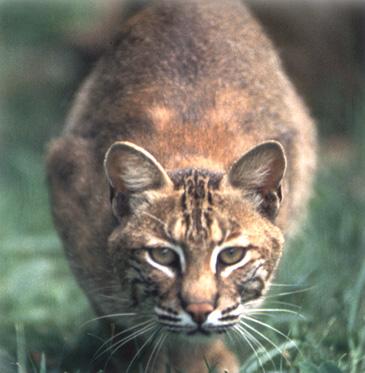
Lynx rufus, Sunday 10 May 2009, south of Solduc river, Olympic National Park. (Pic from web)
Good taste: knowing, rather than merely believing, what one likes.
vs.
Predictably, I oft run into trouble when called upon to explain my behaviour. Questions along the lines of “Why did/do you …” induce stall. Niko Tinbergen’s (‘On aims and methods of ethology’, 1963) scheme helps me out.
As a littler chap, I was once stalked by a lioness. Seeing those cold yellow eyes bear into me, “why did I freeze?”
(1) The proximate why. Mechanistic.
“I froze because {lioness-poised-to-charge-me sense-data} came to be processed by my brain, which consequently co-ordinated a state approximating physical paralysis. “
(2) The ontogenetic why. Conditioning.
“I froze because repeated childhood experience with being hunted by my sisters in the garden had instilled a more-or-less automated freeze-when-hunted-and-spotted reaction within me.”
(3) The phylogenetic why. Evolutionary history.
“65.9 million years ago, an ancestral proto-mammal who had circumstantially come to be endowed with a mutant primitive freeze mechanism survived a dinosaur tirade that wiped out all his non-freezing relatives. Through continued natural selection my phylogenetic traits incorporate a polished edition of this freeze response.”
(4) The functional why. How does the queried behaviour increase fitness?
“Freezing presented a desperate stab at survival, maximizing {my genes/my/my species/…} chances at procreation.”
Wedding: a long limo lends weight to the occasion.