
Category: Arbitrary
UN Involved in Africa

Sun about to set on Tundra
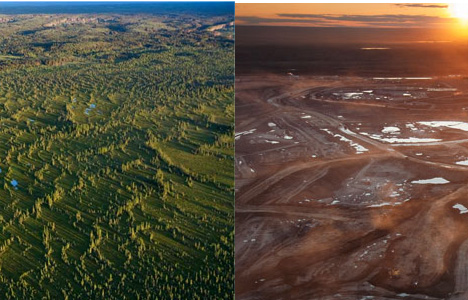
Waking up to the new Climate of Protest
Whys (2)
Recollect a brief post on Niko Tinbergen’s Four Whys, which were couched in the language of evolutionary biology. For an alternate set of differentia, an alternate corresponding Typology of Whys, appeal can be made to Jean Piaget’s categorization of children’s Why questions. On the basis of the form of questions, Piaget distinguishes the following types of Whys:
(1) Explanation
(a) Causal/mechanical
“I froze because {lioness-poised-to-charge-me sense-data} came to be processed by my brain, which consequently co-ordinated a state approximating physical paralysis.”
(b) Finalistic
“I purposefully froze so that I would come to write this sentence today.”
(2) Motivation
(a) Psychological
“I froze because I felt fear.”
(3) Justification
(a) Customs and rules
“Tradition demands that young boys charged by lionesses freeze, and I acted in accordance with it.”
(b) Logical reason
“Prey reveal their position to lions through movement. I did not wish to reveal my position. Hence I decided to freeze.”
What is Enlightenment?
by Immanuel Kant (1784)
Enlightenment is man’s emergence from his self-imposed immaturity. Immaturity is the inability to use one’s understanding without guidance from another. This immaturity is self-imposed when its cause lies not in lack of understanding, but in lack of resolve and courage to use it without guidance from another. Sapere Aude! [dare to know] “Have courage to use your own understanding!” – that is the motto of enlightenment. Continue reading What is Enlightenment?
China to Ban export of large chunk of Periodic Table
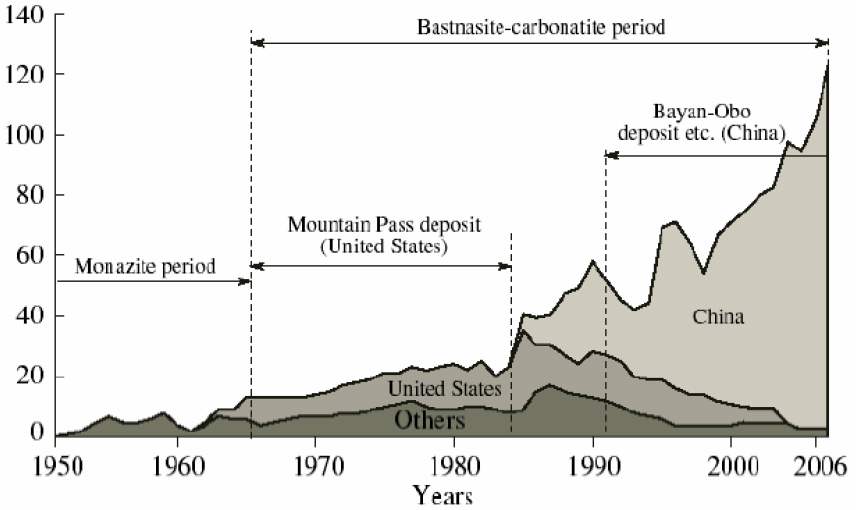
{Rare earth element-oxide production, x103 tons. Source: Naumov (2008), publication unknown}
China stands posed to ban all exports of Thulium, Terbium, Dysprosium, Yttrium and Lutetium, whilst implementing large reductions in exports of Neodymium, Europium, Cerium and Lanthanum.
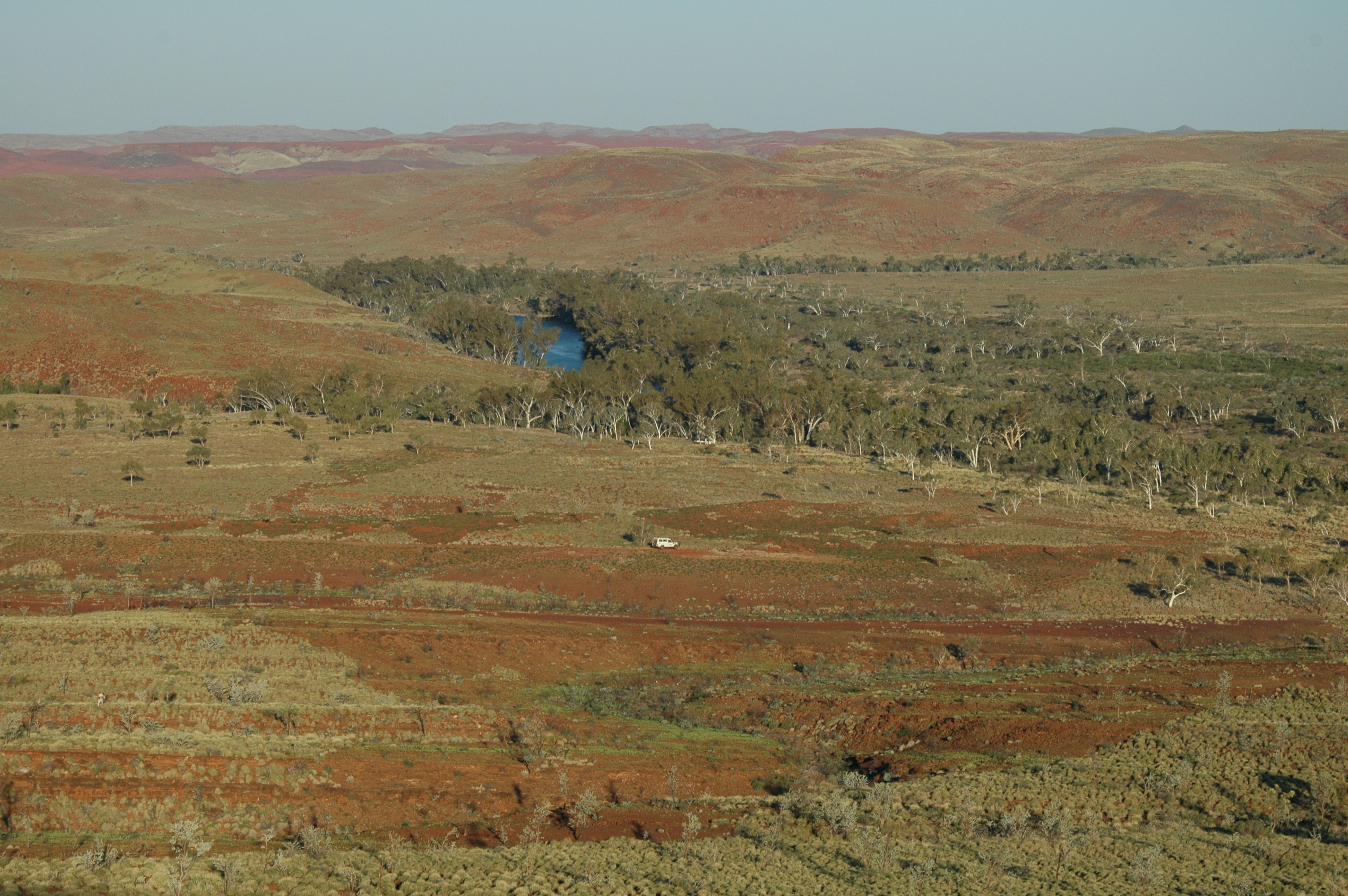
Why i Study Rocks
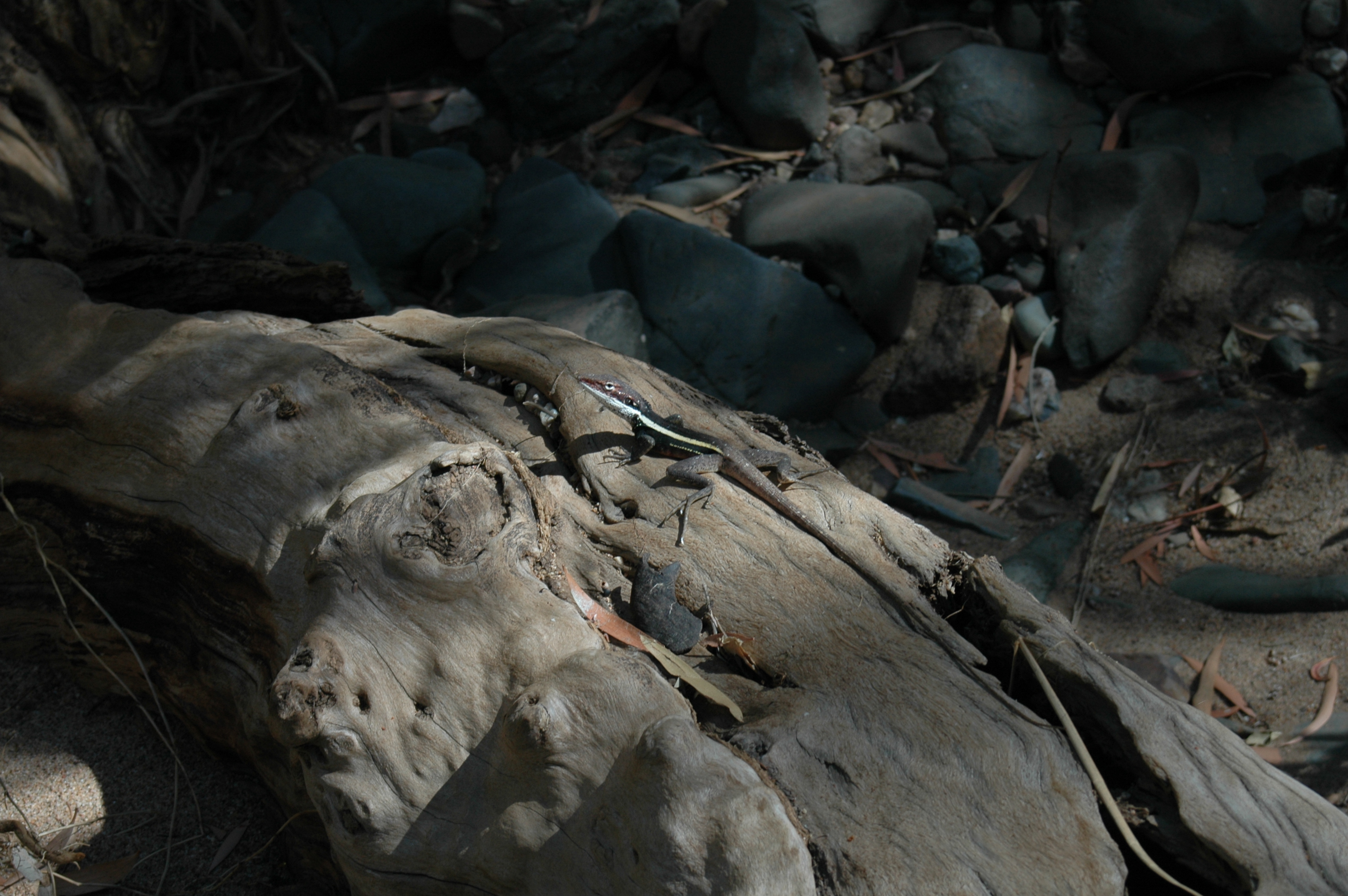
Why i Study Life
 http://english.aljazeera.net/focus/chinabuystheworld/2009/08/20098125223767930.html