
Author: Jelte
Color for Philosophers
C.L. Hardin (1988)
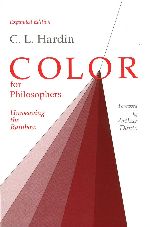 The ultimate book on colour!
On Certainty
“It may be […] that all enquiry on our part is set so as to exempt certain propositions from doubt, if they are ever formulated. They lie apart from the route travelled by enquiry.”
– Ludwig Wittgenstein, On Certainty
Exhibit 01: Time & Being
‘Time & Being’ can be found here.
On Certainty
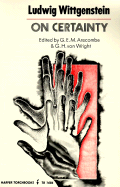 Ludwig Wittgenstein
“Why, would it be unthinkable that I should stay in the saddle however much the facts bucked?” Brother L.W. speaks my language.
The Many Faces of Realism
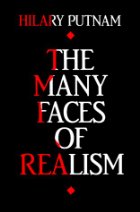 Hilary Putnam
Constrained conceptual relativism. I like it.
Post-War Industrialization despite or through Asymmetric Development?
.jpg "Europe Supported by Africa and America")
1. Introduction
Presented with a choice, an overwhelming majority of the ~6.5 billion humans alive today would opt to reside in relative comfort amongst the industrialized minority. For evidence of this, one need look no further than the migratory fluxes ‘braindraining’ the ‘developing world’ and the considerable risk to which an ever-increasing number of people knowingly expose themselves in a concerted effort to gain a foothold in ‘the developed world’. In this essay, I wish to briefly propose that there exist theoretical – as opposed to historical – grounds for the seemingly stable patterns of sharp discontinuity that so persistently pervade the distribution of global wealth.
Continue reading Post-War Industrialization despite or through Asymmetric Development?
On Specialization
“Specialization means losing sight of the raw effort of constructing either art or knowledge; as a result you cannot view knowledge and art as choices and decisions, commitments and alignments, but only in terms of impersonal theories or methodologies. … In the end as a fully specialized … intellectual you become tame and accepting of whatever the so-called leaders in the field will allow. Specialization also kills your sense of excitement and discovery, both of which are irreducibly present in the intellectuals makeup. In the final analysis, giving up to specialization is, I have always felt, laziness, so you end up doing what others tell you, because that is your specialty after all.”
– Edward Said (1994), Representations of the Intellectual
On Aggression
Konrad Lorenz (1966)
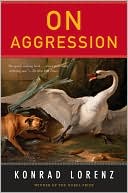 Searching for the roots of human aggression in other animals.
On what i am
Let philosophers have their philosophy. Too institutional to me.
Am I not allowed to be nothing?
Then I’ll opt for Heidegger’s thinking.
But like Kant’s unworldliness, thinking alone doesn’t cut it. Not even close.
Call me Ishmael: “I try everything, and I achieve what I can.”