“If the seasons of husbandry be not interfered with, the grain will be more than can be eaten. If close nets are not allowed to enter the pools and ponds, the fishes and turtles will be more than can be consumed. If the axes and bills enter the hills and forests only at the proper time, the wood will be more than can be used. When the grain and fish and turtles are more than can be eaten, and there is more wood than can be used, this enables the people to nourish their living and mourn for their dead, without any feeling against any. This condition, in which the people nourish their living and bury their dead without any feeling against any, is the beginning of the Kingly way.” – Mencius, ~300 BCE.
Author: Jelte
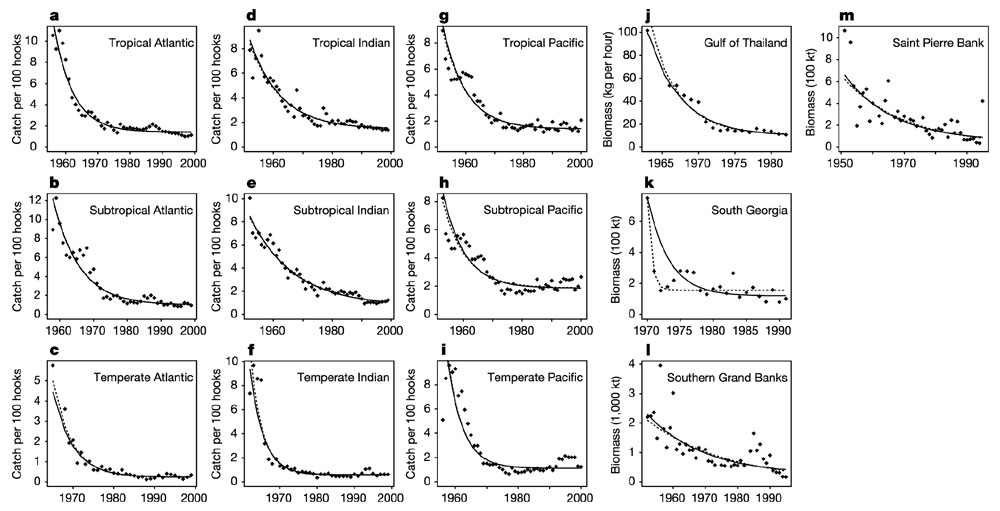
Collapsing Fisheries
“Today each and every river and waterside of our realm, large and small, yields nothing due to the evil of the fishers and the devices of [their] contriving, and because the fish are prevented by them from growing to their proper condition, nor have the fish any value when caught by them, nor are they any good for human consumption, but rather bad, and further it happens that they are much more costly than they used to be, which results in no moderate loss to the rich and poor of our realm.” – King Philip IV of France (1289).
Relative biomass estimates from the beginning of industrialized fishing:
The Sacred Prostitute
Nancy Qualls-Corbett
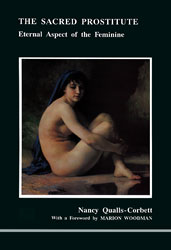 Above all, a warning of the consequences of over-masculinization of society today.
kairos – the right moment for a metamorphosis of the gods
“[A] mood of universal destruction and renewal […] has set its mark on our age. This mood makes itself felt everywhere, politically, socially, and philosophically. We are living in what the Greeks called the kairos [sic] – the right moment – for a ‘metamorphosis of the gods,’ of the fundamental principles and symbols. This peculiarity of our time, which is certainly not of our conscious choosing, is the expression of the unconscious man within us who is changing. Coming generations will have to take account of this momentous tranformation if humanity is not to destroy itself through the might of its own technology and science. […] So much is at stake and so much depnds on the psychological constitution of modern man. […]
Does the individual know that he [sic] is the makeweight that tips the scales?” – Jung, C.G. (1970), The Undiscovered Self.
Shifting baselines
“Present-day man has recently become aware that history has been accelerating – and this at an accelerating rate. The present generation has been conscious of this increase of acceleration in its own lifetime; and the advance in man’s knowledge of this past has revealed, in retrospect, that the acceleration began about 30,000 years ago … and that it has taken successive “great leaps forward” with the invention of agriculture, with the dawn of civilization, and with the progressive harnassing – within the last two centuries – of the titanic forces of inanimate nature. The approach of the climax foreseen intuitively by the prophets is being felt, and feared, as a coming event. Its imminence is, today, not an article of faith; it is a datum of observation and experience.” – Toynbee, A.J. (1947), A study of history.
I dreamt of Palmyra

Doctoral Dissertation
“Gehe nur an ihm zu Grunde — ich weiss keinen besseren Lebenszweck als am Grossen und Unmöglichen, animae magnae prodigus, zu Grunde zu gehen.â€
– Friedrich Nietzsche (1874), Vom Nutzen und Nachtheil
der Historie für das Leben.
_
Squeezing Blood from a Stone:
Inferences into the Life and Depositional Environments
of the Early Archaean Continue reading Doctoral Dissertation
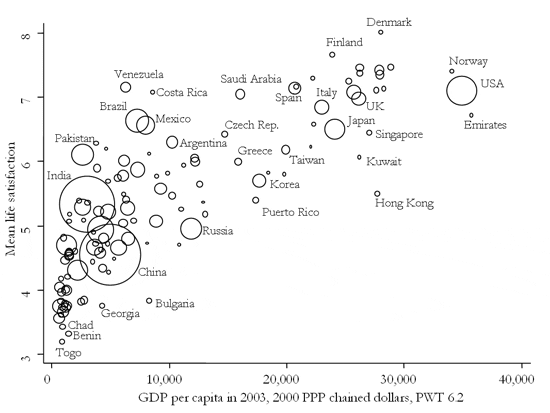
Measured Life Satisfaction & GDP
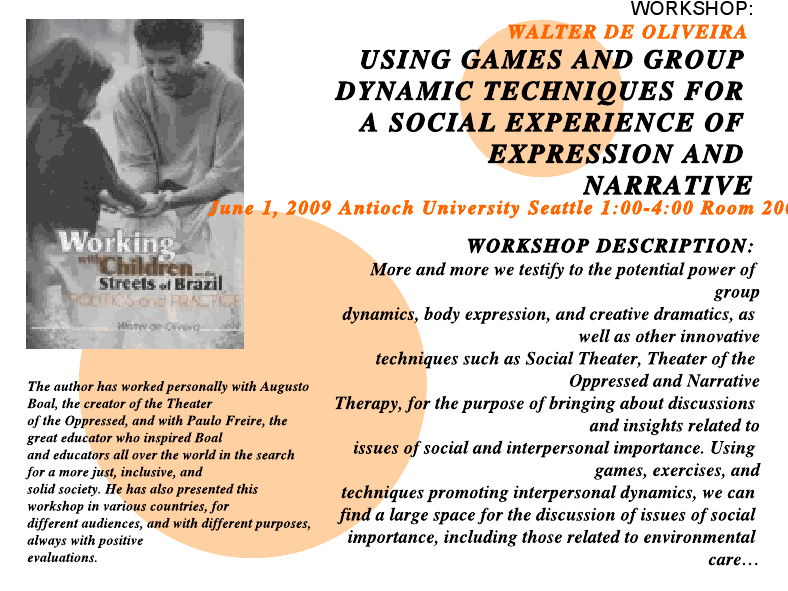
Using games and group dynamic techniques for a social experience of expression and narrative
Water
Everything on the earth bristled, the bramble
pricked and the green thread
nibbled away, the petal fell, falling
until the only flower was the falling itself.
Water is another matter,
has no direction but its own bright grace,
runs through all imaginable colors,
takes limpid lessons
from stone,
and in those functionings plays out
the unrealized ambitions of the foam.
– Pablo Neruda