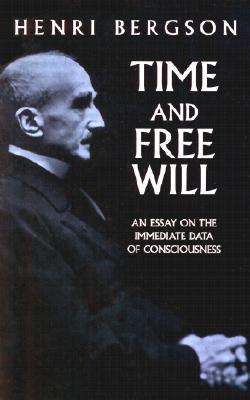
 Bergson subscribes to a kind of dualism. Like Descartes’, his cleaves subject and object. However, in contrast to the Cartesian doctrine, for Bergson this cleft is much more a consequence of rather than a grounding for his philosophy.
The deeper distinction for Bergson lies between what he calls the quantative and the qualitative [1]. One important difference that sets these apart lies in the nature of the multiplicity which is inhered. Quantitative multiplicity consists in juxtaposition, making it possible to speak of discrete ‘objects’. Qualitative multiplicity, on the other hand, consists in interpenetration. Unlike the former, the latter is not amenable to division, with major consequences for epistemology. Continue reading Essai sur les données immédiates de la conscience / Time and free will