Money and Social Conventions on the Island of Yap

The economy of Yap, a small island in the Pacific, once had a type of money that was something between commodity and fiat money. The traditional medium of exchange in Yap was fei, stone wheels up to 12 feet in diameter. These stones had holes in the center so that they could be carried on poles and used for exchange. Large stone wheels are not a convenient form of money. The stones were heavy, so it took substantial effort for a new owner to take his fei home after completing a transaction. Although the monetary system facilitated exchange, it did so at great cost. Eventually, it became common practice for the new owner of the fei not to bother to take physical possession of the stone. Instead, the new owner accepted a claim to the fei without moving it. In future bargains, he traded this claim for goods that he wanted. Having physical possession of the stone became less important than having legal claim to it.

This practice was put to a test when a valuable stone was lost at sea during a storm. Because the owner lost his money by accident rather than through negligence, everyone agreed that his claim to the fei remained valid. Even generations later, when no one alive had ever seen this stone, the claim to this fei was still valued in exchange.

– Angell, Norman (1929) ‘The Story of Money’, In: Mankiw, N.G. (2009) ‘Macroeconomics’ (7th ed.)

Values and Time

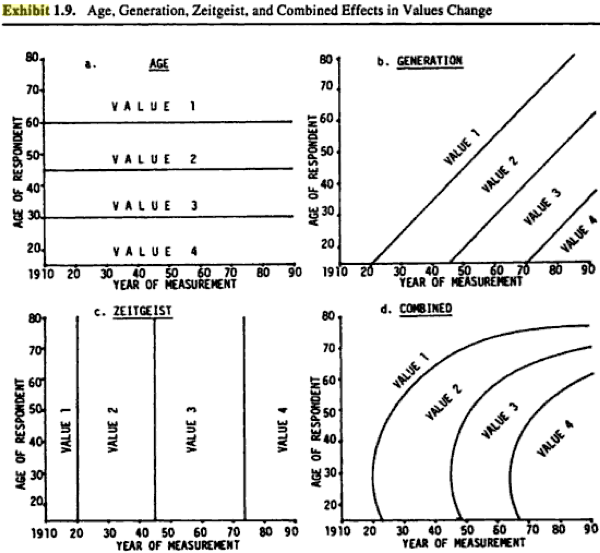
“Age and generation effects are often confused. Complaints of older people about “young people today” have been found on an Egyptian papyrus manuscript that is 3,000 years old. One of the oldest Greek texts preserved, Hesiod’s Works and Days, which dates towards the end of the eighth century B.C., contains a pessimistic paragraph on the new generation in which “father will have no common bond with son” and “men will dishonor parents … and will blame and criticize with cruel words””

– Hofstede, G. (2001), ‘Culture’s Consequences’, p. 35.

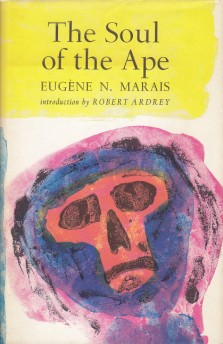
The Soul of the Ape

(Written 1920s, published 1969) Eugène Marais

The Soul of the Ape shows what a tremendous difference a polished edit can do for the conveyance of ideas.  The work was put together by Robert Ardrey, Marais’ tireless exponent, from an unfinished manuscript found many years after the author’s suicide.  This makes it hard to hold many of Marais’ ideas up to the light.

Why what Marais has to say about baboons might interest us

Marais’ isolated existence in a narrow kloof in South Africa’s Waterberg Plateau in the 1920s had two important consequences.  The first was that, despite his rigorous scientific training, he remained untouched by the influence of scientific work being done elsewhere.  The second was that his subjects, a large troop of Chacma baboons, were largely untainted by human contact – outside of their doings with Marais himself.  Because of the location of Marais’ hut, the baboons had no choice but to pass the astute observer every morning on their way out in search for food, and every evening on their way back to the home cave.  Marais was a gifted naturalist who was able to carry out a detailed study of primates under highly favourable conditions before ‘primate science’ existed. Continue reading The Soul of the Ape