Sipi Falls, Mt. Elgon, Uganda
Sipi Falls, Mt. Elgon, Uganda
“Some scientists and exponents of “scientism” will be tempted to turn their back on [the challenges posed by epistemological relativism: attacks on the objectivity of science]. They may well suppose that, if people who can’t or won’t do the hard work to understand science wish to pretend it isn’t the best approximation to the truth about the world we have, that is their problem. And if there are people whose wish that there be a reality – religious, spiritual, holistic, metaphysical – that transcends anything that science can know about, leads them to the thought that science is blinkered and partial in its account of the truth, well, who are we scientists to take them from their dogmatic slumbers? But the stakes for science and for civilization are too high simply to treat those who deny its objectivity in the way we would treat those who claim the Earth is flat.” – Alex Rosenberg (2005), ‘Philosophy of Science’, p. 191. (Emphasis mine)

Malé, Maldives
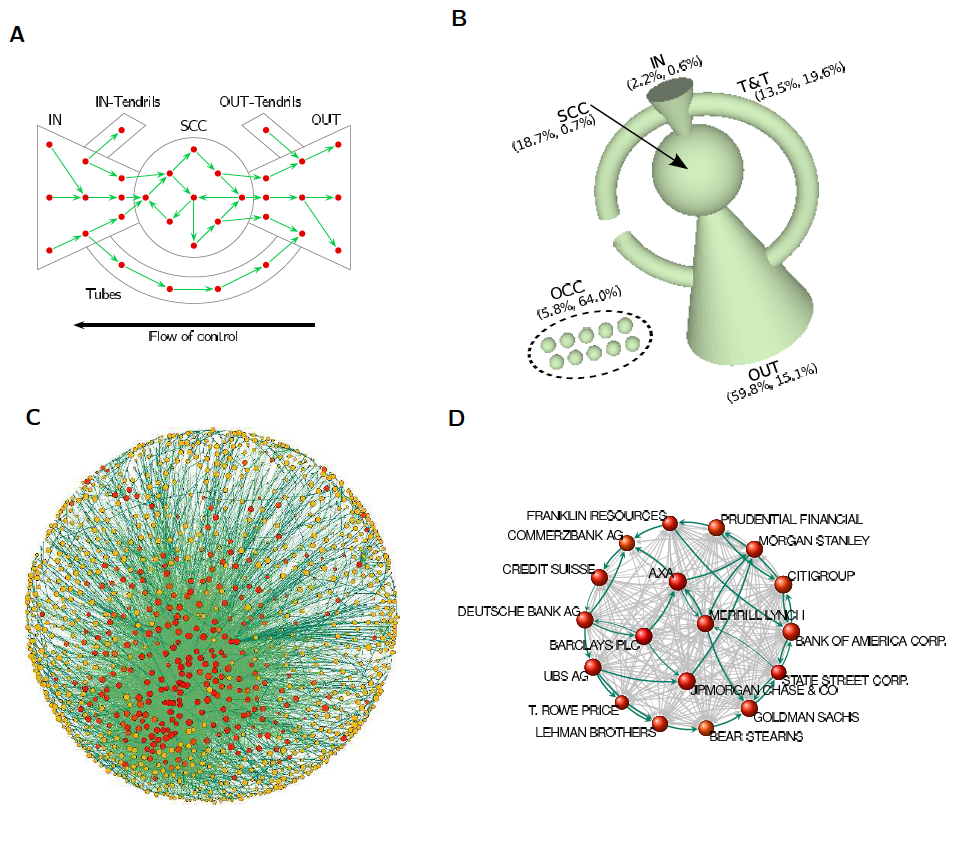
Network topology. (A) A bow-tie consists of in-section (IN), out-section (OUT), strongly connected component or core (SCC), and tubes and tendrils (T&T). (B) Bow-tie structure of the largest connected component (LCC) and other connected components (OCC). Each section volume scales logarithmically with the share of its TNCs operating revenue. In parenthesis, percentage of operating revenue and number of TNCs, cfr. Table 1. (C) SCC layout of the SCC (1318 nodes and 12191 links). Node size scales logarithmically with operation revenue, node color with network control (from yellow to red). Link color scales with weight. (D) Zoom on some major TNCs in the financial sector. Some cycles are highlighted.
Source: Vitali, S., Glattfelder, J.B., Battiston, S. ‘The network of global corporate control’.
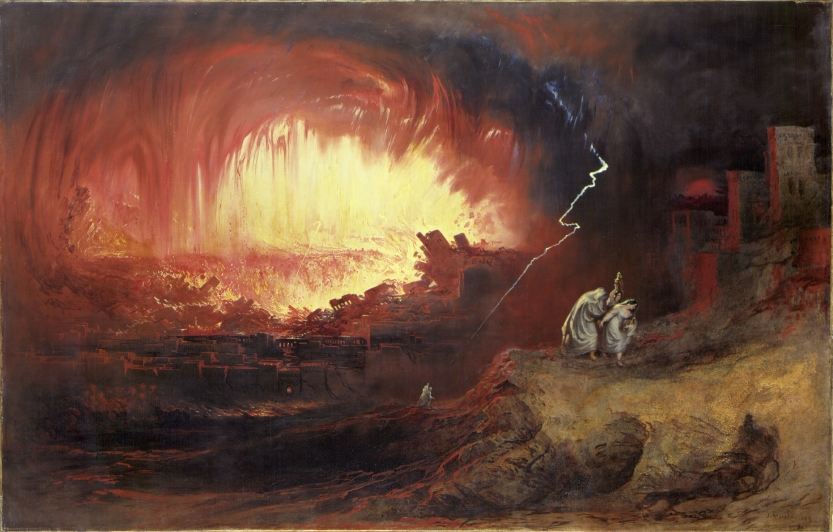
John Martin, ‘The Destruction of Sodom and Gomorrah’ (1852)
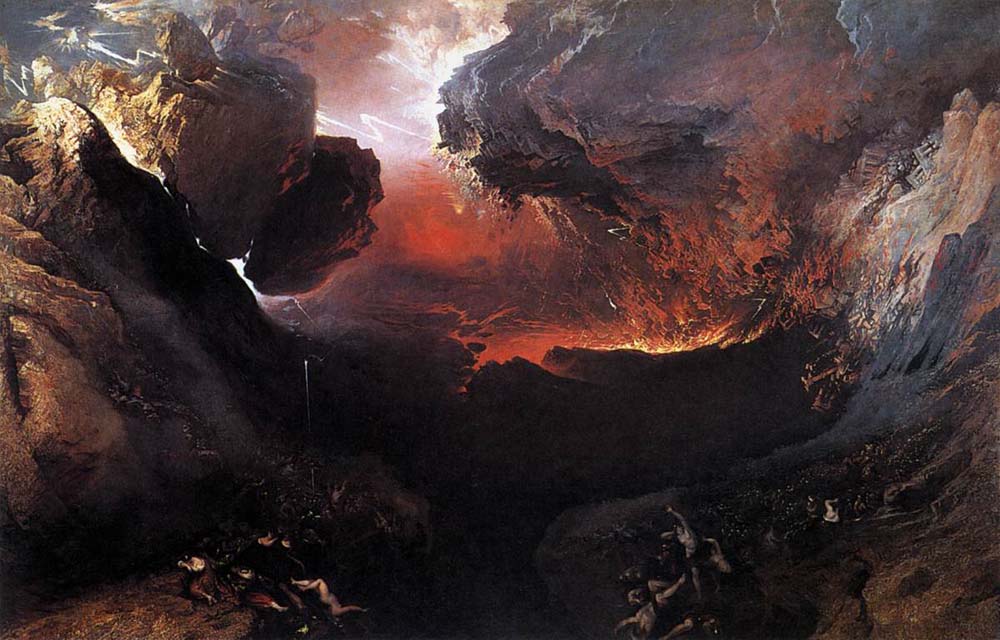
John Martin ‘The Great Day of His Wrath’ (1853)
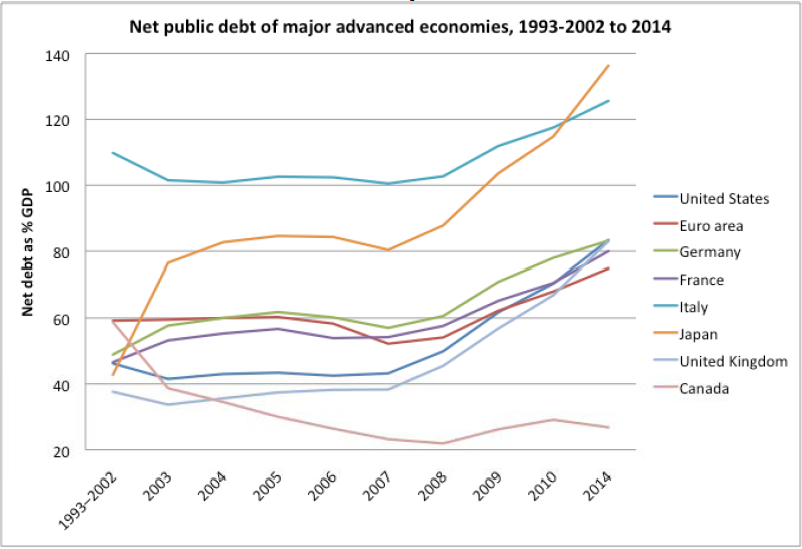
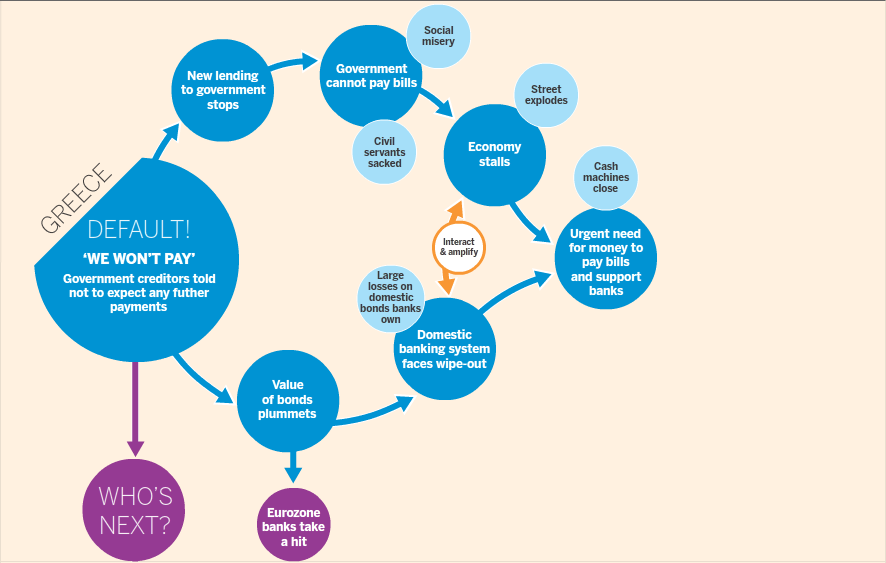
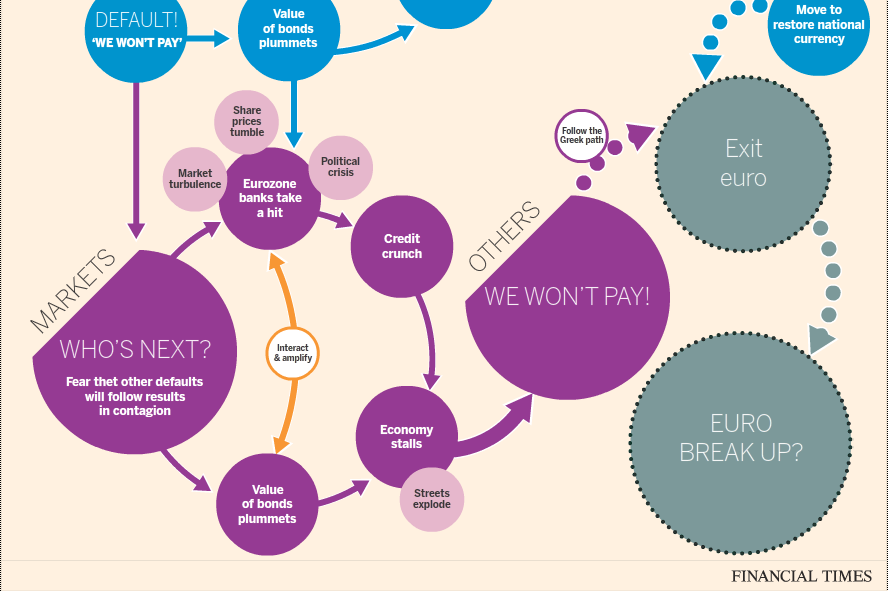
Source: Financial Times (Fri 16 Sep 2011)
(2010) Christian Anton Smedshaug
 A work that is timely and rich in content. On the down side, too little of its data is appropriately referenced, and it is shakily translated, becoming almost unreadable in the last few chapters. Its impressive arsenal of graphs is let down by sloppy captions and legends.